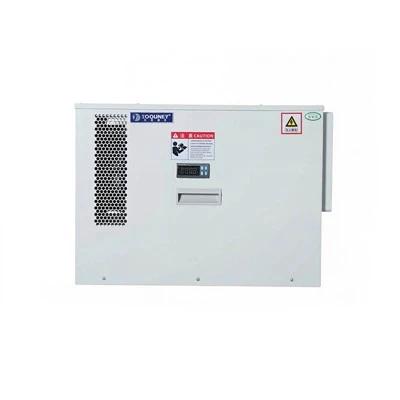

Hey there! As a supplier of Electric Water Chillers, I often get asked about the big question: how to select between a centrifugal and a screw electric water chiller? It's a crucial decision, and I'm here to break it down for you in a way that's easy to understand.
Understanding the Basics
First off, let's talk about what these two types of water chillers are. A centrifugal electric water chiller uses a centrifugal compressor. It's like a high - speed spinning wheel that compresses the refrigerant gas. This type of chiller is great for large - scale applications. It can handle high cooling loads efficiently, and it's often found in big commercial buildings, industrial complexes, and large data centers.
On the other hand, a screw electric water chiller uses a screw compressor. Picture two interlocking screws that compress the refrigerant as they rotate. Screw chillers are more flexible in terms of capacity. They can be used in a wide range of applications, from medium - sized industrial processes to smaller commercial spaces.
Cooling Capacity
One of the first things you need to consider is the cooling capacity you require. If you're running a large factory with multiple production lines or a huge office building with hundreds of employees, a centrifugal water chiller might be your best bet. These chillers can provide cooling capacities ranging from 200 tons to over 3000 tons. They're designed to handle massive amounts of heat and keep large spaces at a comfortable temperature.


For example, if you're looking at a Laboratory High and Low Temperature Refrigeration Unit in a large research facility, a centrifugal chiller could be ideal for maintaining the precise temperature needed for experiments.
However, if your cooling needs are more in the medium - range, say for a small to medium - sized manufacturing plant or a local hotel, a screw water chiller would be more suitable. Screw chillers typically offer cooling capacities from 20 tons to 500 tons. They can be adjusted to meet the specific cooling requirements of your space, making them a versatile option.
Energy Efficiency
Energy efficiency is a big deal these days. Everyone wants to save on energy costs and reduce their environmental impact. Centrifugal water chillers are known for their high energy efficiency at full - load operation. They're designed to run most efficiently when they're operating at or near their maximum capacity. So, if your facility has a relatively stable and high cooling load throughout the day, a centrifugal chiller can save you a lot of money on energy bills.
Screw water chillers, on the other hand, are more efficient at part - load operation. In many real - world scenarios, the cooling load in a building or an industrial process varies throughout the day. For instance, in an office building, the cooling demand is lower at night. Screw chillers can adjust their capacity to match the changing load, which means they use less energy when the demand is low. This makes them a great choice for applications where the cooling load fluctuates.
Maintenance and Reliability
Maintenance is another important factor to consider. Centrifugal water chillers have fewer moving parts compared to screw chillers. This generally means less wear and tear and potentially lower maintenance costs in the long run. However, when something does go wrong with a centrifugal chiller, it can be more complex and expensive to repair. The compressor in a centrifugal chiller is a highly specialized component, and any issues with it require skilled technicians to fix.
Screw water chillers have more moving parts, but they're generally easier to maintain. The screw compressors are more robust and can often handle minor issues without major breakdowns. Routine maintenance tasks, such as oil changes and filter replacements, are relatively straightforward. This makes screw chillers a popular choice for facilities that don't have a dedicated maintenance team or where quick and easy maintenance is a priority.
Cost
Cost is always a factor in any purchasing decision. Centrifugal water chillers are usually more expensive upfront. The high - tech components and the large - scale design contribute to the higher cost. However, as mentioned earlier, their energy efficiency at full - load can result in long - term savings on energy bills.
Screw water chillers are more affordable in terms of the initial purchase price. They're a great option for businesses on a budget or those that need a cost - effective cooling solution. And with their part - load efficiency, they can also save you money on energy over time.
Noise Level
Noise can be a significant concern, especially in environments where quiet operation is essential. Centrifugal water chillers tend to be quieter during operation. The design of the centrifugal compressor and the overall system results in less vibration and noise. This makes them a good choice for applications where noise pollution is a problem, such as in hospitals or office buildings.
Screw water chillers can be a bit noisier, but modern screw chiller designs have made significant improvements in reducing noise levels. If noise is a major issue, you can look for screw chillers with noise - reducing features or install them in a separate, sound - insulated room.
Application - Specific Considerations
The type of application also plays a role in the chiller selection. For Water Chiller for Industrial Use, such as in chemical processing or food manufacturing, the process requirements need to be carefully considered. Some industrial processes require very precise temperature control, and the chiller needs to be able to maintain a stable temperature.
In commercial applications like shopping malls or theaters, the chiller needs to be able to handle a large number of people and a high heat load. The ability to quickly cool down the space during peak hours is crucial.
Making the Decision
So, how do you make the final decision between a centrifugal and a screw electric water chiller? It really comes down to your specific needs. If you have a large - scale application with a stable and high cooling load, energy efficiency at full - load is important, and you can afford the higher upfront cost, a centrifugal water chiller is probably the way to go.
On the other hand, if your cooling load varies, you're on a budget, need easy maintenance, and don't mind a slightly noisier operation, a screw water chiller would be a better choice.
As a supplier of Electric Water Chillers, I'm here to help you make the right decision. We have a wide range of centrifugal and screw water chillers to meet different needs. If you're still not sure which one is best for you, feel free to reach out to us. We can provide you with more detailed information, help you calculate your cooling requirements, and offer expert advice.
Whether you're in the market for a new water chiller or looking to upgrade your existing system, we're here to assist you. Let's have a chat about your specific situation and find the perfect water chiller for your needs. Contact us today to start the conversation!
References
- ASHRAE Handbook of Refrigeration.
- Manufacturer's technical documents for centrifugal and screw water chillers.