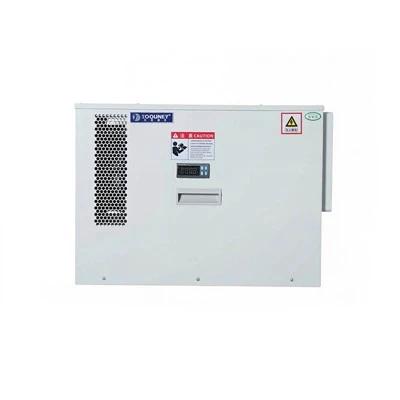

Hey there! As a supplier of server room air conditioners, I've had my fair share of dealing with different types of cooling systems. Today, I want to talk about two popular options: direct - expansion (DX) and chilled - water server room air conditioners. Let's dive right in and explore the differences between these two systems.
How They Work
First off, let's understand how each system works. A direct - expansion air conditioner is like a straightforward workhorse. In a DX system, the refrigerant directly cools the air that's circulated through the server room. The refrigerant evaporates in the evaporator coil, absorbing heat from the air in the process. Then, it's compressed by the compressor and sent to the condenser, where the heat is released. This cycle keeps repeating to maintain a stable temperature in the server room. It's a kind of "self - contained" system, and it's pretty common in smaller setups. You can check out our Small Server Room Air Conditioner options if you're interested in DX for a compact space.
On the other hand, chilled - water air conditioners work a bit differently. In this setup, a central chiller plant is used to cool water. The chilled water is then pumped through pipes to the air handling units in the server room. These units use the chilled water to cool the air. The water picks up the heat from the air and is then pumped back to the chiller to be cooled again. It's a more complex system but is often used in larger data centers and server rooms. If you're looking for a solution for a bigger space, our Machine Room Hvac might be the right fit.
Efficiency
Efficiency is a big deal when it comes to server room air conditioners. And the two systems have different strengths here.
DX systems are generally more efficient for smaller server rooms. Since they're self - contained and have fewer components, there's less energy loss in the transfer process. But they can be less efficient as the load increases. That's because the compressor has to work really hard to cool large volumes of air, which can lead to higher energy consumption.
Chilled - water systems, on the other hand, shine in large - scale operations. They can handle high heat loads more efficiently. The central chiller can be optimized for better performance, and the chilled water can be distributed evenly throughout the server room. This means that for a large data center with multiple racks of servers generating a ton of heat, a chilled - water system can be a more energy - efficient choice. You might want to consider our Machine Room Cooling Systems for such scenarios.
Installation and Maintenance
Installation and maintenance are also important factors.
Installing a DX system is usually quicker and easier. It doesn't require a complex network of pipes like a chilled - water system. You can simply mount the unit on the wall or the floor, connect it to the power supply and refrigerant lines, and you're good to go. Plus, if you need a more flexible setup, our Server Room Split System Air Conditioning offers a way to cool specific areas.
However, maintenance can be a bit of a hassle. The refrigerant levels need to be checked regularly, and the compressor and other components can wear out over time. You'll sometimes need a technician with expertise in refrigerant handling.


Chilled - water systems are more complex to install. You need to set up the central chiller plant, lay the pipes, and connect everything properly. But once it's up and running, maintenance is often more centralized. You mainly need to focus on the chiller plant, the pumps, and the water treatment. Our Machine Server Room Air Conditioning solutions are designed to make the installation and maintenance process as smooth as possible.
Cost
Of course, cost is always a major consideration.
DX systems are generally cheaper upfront. You don't have to invest in a central chiller plant or a network of pipes, so the initial purchase and installation costs are lower. This makes them a great option for small businesses or startups with a limited budget.
Chilled - water systems, though more expensive to set up initially, can offer cost savings in the long run, especially for large - scale operations. Their higher energy efficiency can result in lower electricity bills over time. And with proper maintenance, they can have a longer lifespan.
Flexibility
When it comes to flexibility, DX systems have the upper hand. They can be easily installed in different locations, and you can add or remove units as your server room needs change. This makes them ideal for growing businesses or server rooms with changing layouts.
Chilled - water systems are less flexible in terms of installation. Once the pipes are laid, it's difficult and costly to make changes. But they can be more scalable in terms of capacity. You can upgrade the central chiller plant to handle more load without having to replace the entire system.
Environmental Impact
In today's world, environmental impact is an important factor.
DX systems often use refrigerants that can have a high global warming potential (GWP). However, there are now more eco - friendly refrigerants available. Our team can help you choose the right refrigerant for your DX system to minimize the environmental impact.
Chilled - water systems, when combined with a high - efficiency chiller and proper water treatment, can be more environmentally friendly. They use water as the cooling medium, which is a natural and renewable resource.
So, which one is right for you? Well, it depends on a bunch of factors like the size of your server room, your budget, and your long - term plans. If you have a small server room with a tight budget, a DX system might be the way to go. But if you're running a large data center and looking for long - term energy efficiency, a chilled - water system could be your best bet.
If you're still not sure which system is right for your server room, or if you have any other questions about our server room air conditioners, don't hesitate to reach out. We're here to help you make the best decision for your business. Whether you need a small, energy - efficient unit or a large - scale cooling solution, we've got you covered. Contact us, and let's start a conversation about how we can enhance the cooling performance of your server room!
References
- ASHRAE (American Society of Heating, Refrigerating and Air - Conditioning Engineers). ASHRAE Handbook.
- Server Room Air Conditioning Best Practices Guides.