
What is the pressure control of an industrial rotary screw compressor?
As a supplier of industrial rotary screw compressors, I often encounter customers who are curious about the pressure control mechanisms of these powerful machines. In this blog post, I'll delve into the details of pressure control in industrial rotary screw compressors, explaining how it works, why it's important, and the different methods used.
Understanding the Basics of Industrial Rotary Screw Compressors
Industrial rotary screw compressors are widely used in various industries due to their high efficiency, reliability, and continuous operation capabilities. These compressors work by using two intermeshing helical rotors to compress air or gas. As the rotors turn, the volume between them decreases, causing the air or gas to be compressed. The compressed air is then discharged at a higher pressure for use in different applications, such as pneumatic tools, manufacturing processes, and HVAC systems.
The Importance of Pressure Control
Pressure control is a critical aspect of industrial rotary screw compressors for several reasons. Firstly, maintaining the correct pressure is essential for the proper functioning of the equipment connected to the compressor. Different applications require specific pressure levels, and if the pressure is too high or too low, it can lead to inefficiencies, equipment damage, or even safety hazards.
Secondly, pressure control helps to optimize the energy consumption of the compressor. By adjusting the pressure according to the demand, the compressor can operate at its most efficient level, reducing energy costs and minimizing environmental impact.
Finally, proper pressure control extends the lifespan of the compressor. Operating the compressor at a consistent and appropriate pressure reduces wear and tear on the components, leading to fewer breakdowns and lower maintenance costs.
Methods of Pressure Control in Industrial Rotary Screw Compressors
1. Load/Unload Control
Load/unload control is one of the most common methods of pressure control in industrial rotary screw compressors. In this system, the compressor operates in two modes: the load mode and the unload mode.
When the demand for compressed air is high, the compressor operates in the load mode, where it compresses air at full capacity. As the pressure in the air receiver tank reaches the set maximum pressure, the compressor switches to the unload mode. In the unload mode, the compressor continues to run, but it no longer compresses air. Instead, it recirculates the air within the compressor, reducing the power consumption.
Once the pressure in the tank drops to the set minimum pressure, the compressor switches back to the load mode and resumes compressing air. This cycle repeats as long as the compressor is in operation.
Load/unload control is relatively simple and cost - effective, but it can result in some energy losses during the unload mode, especially if the compressor spends a significant amount of time in this mode.
2. Modulating Control
Modulating control is a more advanced method of pressure control that allows the compressor to adjust its capacity continuously according to the demand. In a modulating control system, the compressor uses a variable - speed drive (VSD) to change the speed of the rotors.
When the demand for compressed air is low, the VSD reduces the speed of the rotors, which in turn reduces the amount of air being compressed. As the demand increases, the VSD increases the speed of the rotors to meet the higher demand. This way, the compressor can operate at a more precise pressure level, matching the demand more closely and reducing energy consumption.
Modulating control is more energy - efficient than load/unload control, especially in applications where the demand for compressed air varies frequently. However, it is also more expensive to implement due to the cost of the VSD.
3. Dual - Control (Load/Unload and Modulating)
Some industrial rotary screw compressors use a dual - control system that combines the advantages of load/unload control and modulating control. In this system, the compressor operates in the load/unload mode when the demand for compressed air is relatively stable, and it switches to the modulating mode when the demand varies significantly.
This dual - control approach provides a balance between cost - effectiveness and energy efficiency, allowing the compressor to adapt to different operating conditions.


Factors Affecting Pressure Control
Several factors can affect the pressure control of an industrial rotary screw compressor. These include:
1. System Demand
The demand for compressed air in the system is the primary factor that determines the pressure control strategy. If the demand is constant, a simple load/unload control system may be sufficient. However, if the demand varies frequently, a modulating or dual - control system may be more appropriate.
2. Compressor Size
The size of the compressor also plays a role in pressure control. A larger compressor may be able to handle higher demands, but it may also consume more energy if not properly controlled. It is important to select a compressor that is appropriately sized for the application to ensure efficient pressure control.
3. Ambient Conditions
Ambient conditions, such as temperature and humidity, can affect the performance of the compressor and its pressure control. For example, high temperatures can reduce the efficiency of the compressor, while high humidity can cause moisture to accumulate in the compressed air, leading to corrosion and other problems.
Our Industrial Rotary Screw Compressors
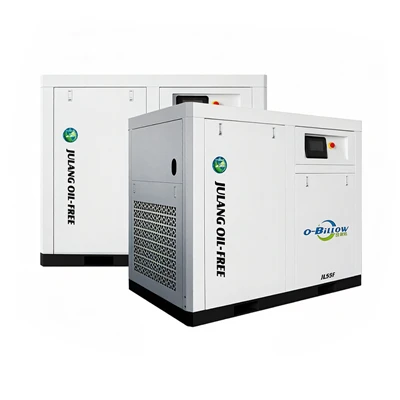
At our company, we offer a wide range of Industrial Rotary Screw Compressor that are designed with advanced pressure control systems. Our Vertical Rotary Screw Air Compressor is a popular choice for applications where space is limited, and it features a highly efficient pressure control mechanism.
We also provide Industrial Screw Type Air Compressor that are suitable for various industrial applications. Our compressors are equipped with either load/unload control, modulating control, or dual - control systems, depending on the specific requirements of the customer.
Contact Us for Purchase and Consultation
If you are in the market for an industrial rotary screw compressor and need more information about pressure control or our products, we encourage you to contact us. Our team of experts is ready to assist you in selecting the right compressor for your application and providing you with detailed information about the pressure control options available.
References
- Compressed Air and Gas Institute (CAGI). Standards for Rotary Screw Compressors.
- ASME (American Society of Mechanical Engineers). Pressure Vessel and Compressor Standards.
- Manufacturer's manuals for industrial rotary screw compressors.