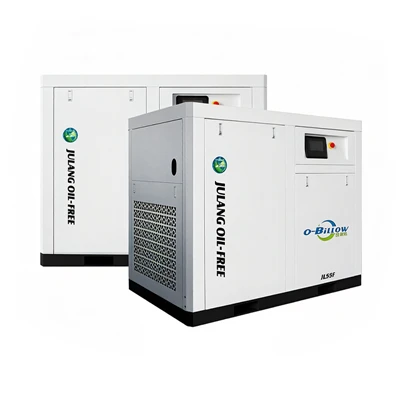

As a trusted supplier of Vertical Screw Compressors, I understand the critical importance of monitoring the operation status of these machines. A well - functioning vertical screw compressor is the backbone of many industrial operations, and continuous and accurate monitoring can prevent costly breakdowns, ensure optimal performance, and extend the lifespan of the equipment. In this blog, I will share some practical ways to monitor the operation status of a vertical screw compressor.


1. Temperature Monitoring
Temperature is a key indicator of the compressor's health. Excessive temperature can lead to accelerated wear and tear, reduced efficiency, and even system failures.
- Discharge Temperature: The discharge temperature of the compressed air reflects the compression process's intensity. When monitoring, install temperature sensors at the compressor's discharge port. A normal discharge temperature should fall within the range specified by the manufacturer. For example, if the target discharge temperature is set between 90°C - 100°C for a certain model of vertical screw compressor, and the actual temperature exceeds 110°C, it could indicate issues such as clogged air filters, improper lubrication, or a malfunctioning cooling system.
- Motor Temperature: The motor that drives the compressor also needs close temperature monitoring. Overheating of the motor can be caused by overloading, poor ventilation, or electrical problems. By installing a thermal sensor on the motor casing, operators can detect abnormal increases in temperature promptly. Regularly checking and recording the motor temperature can help in predicting potential motor failures and taking preventive measures.
2. Pressure Monitoring
Pressure is another vital parameter in the operation of a vertical screw compressor.
- Suction Pressure: Monitoring the suction pressure provides information about the air intake conditions. Low suction pressure may be due to a blocked air intake filter, a leaking suction valve, or an issue with the upstream air - supply system. On the other hand, extremely high suction pressure could indicate problems with the air source or an improper setting of the intake control. For example, if the normal suction pressure is around 0.08 - 0.1 MPa and it drops to 0.05 MPa, it is a sign that something is amiss and needs further investigation.
- Discharge Pressure: The discharge pressure should be maintained within a narrow range according to the system requirements. Fluctuations in discharge pressure can affect the performance of downstream equipment. If the discharge pressure is lower than the set value, it may be caused by compressor wear, leakage in the discharge pipeline, or a malfunctioning pressure - regulating valve. Conversely, an excessively high discharge pressure can put extra stress on the compressor and other components, increasing the risk of damage. Specialized pressure sensors can be installed at the suction and discharge ports to provide real - time pressure data. These data can be integrated into a centralized monitoring system for easy analysis.
3. Oil Level and Quality
Lubricating oil plays a crucial role in the operation of a vertical screw compressor.
- Oil Level: The oil level in the compressor should be checked regularly. A low oil level can result in insufficient lubrication, leading to increased friction between moving parts and higher operating temperatures. Using a sight glass or an automatic oil - level sensor, operators can easily observe the oil level. If the oil level is below the minimum mark, it is necessary to refill the oil promptly.
- Oil Quality: Besides the quantity, the quality of the oil also needs to be monitored. Over time, the oil can become contaminated with dirt, debris, and moisture, which can reduce its lubricating properties and cause corrosion. Regularly taking oil samples for analysis in a laboratory can reveal the oil's condition, including its viscosity, water content, and the presence of contaminants. Based on the analysis results, decisions can be made about whether to change the oil or take other corrective actions.
4. Vibration Monitoring
Excessive vibration is a warning sign of potential problems in a vertical screw compressor.
- Causes of Vibration: Vibration can be caused by unbalanced rotating parts, loose components, misalignment, or mechanical wear. By installing vibration sensors on key parts of the compressor, such as the motor, compressor housing, and piping, the vibration levels can be continuously monitored.
- Thresholds and Analysis: Each compressor model has a specified vibration threshold. If the measured vibration exceeds this threshold, it is an indication that there may be an issue. Advanced monitoring systems can perform frequency analysis on the vibration data to identify the source of the problem. For example, high - frequency vibrations may be related to bearing wear, while low - frequency vibrations could be caused by misalignment. Regular vibration monitoring can help in detecting problems early, before they lead to more serious and costly damage.
5. Electrical Parameter Monitoring
For the electric - driven vertical screw compressors, monitoring electrical parameters is equally important.
- Current and Voltage: Monitoring the current and voltage of the motor can provide insights into its loading condition. Abnormal current spikes may indicate motor overload, short circuits, or a malfunction in the electrical control system. Fluctuations in voltage can also affect the motor's performance and lifespan. Installing power meters and voltage testers can help in continuously monitoring these electrical parameters.
- Power Consumption: Tracking the compressor's power consumption can help in evaluating its energy efficiency. An unexpected increase in power consumption may suggest that the compressor is operating inefficiently, perhaps due to worn - out parts, air leaks, or improper control settings. By comparing the actual power consumption with the rated power and historical data, operators can identify potential problems and take steps to optimize the compressor's operation.
6. Utilization of Advanced Monitoring Systems
Modern technology offers advanced monitoring solutions for vertical screw compressors.
- Remote Monitoring: Using Internet of Things (IoT) technology, it is possible to remotely monitor the operation status of the compressor. This allows operators to access real - time data from anywhere, at any time. Remote monitoring systems can send alerts via email or text messages when abnormal conditions are detected, enabling timely response and reducing downtime.
- Data Analytics: Advanced data analytics tools can process the large amount of data collected from various sensors. These tools can identify trends, patterns, and potential problems that may not be obvious from simple data readings. For example, by analyzing historical temperature and pressure data, the system can predict when maintenance is required, helping to plan maintenance activities more effectively.
Conclusion
In conclusion, monitoring the operation status of a vertical screw compressor is a multi - faceted task that requires attention to various parameters such as temperature, pressure, oil level and quality, vibration, and electrical parameters. By implementing a comprehensive monitoring strategy, operators can ensure the reliable and efficient operation of the compressor, reduce maintenance costs, and extend the equipment's service life.
If you are in need of high - quality Vertical Rotary Screw Air Compressors, Industrial Rotary Air Compressors, or High Pressure Screw Air Compressor, we are here to offer you the best products and services. Our team of experts can also assist you in setting up an effective monitoring system for your compressors. Contact us for more information and to start a procurement discussion.
References
- Compressor Handbook: A Guide to Compressor Technology and Applications.
- Industrial Equipment Maintenance Best Practices.
- Advances in Compressor Monitoring and Control Technologies research papers.