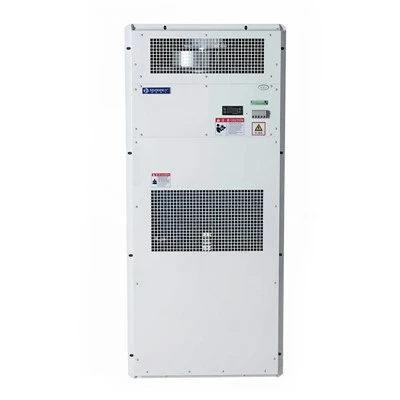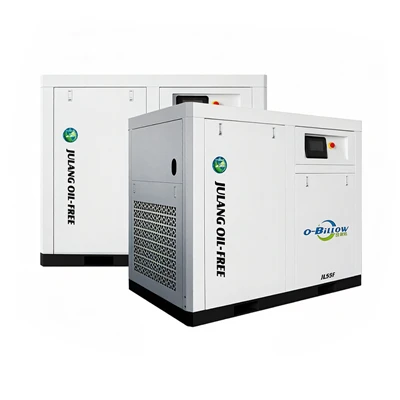

In the modern industrial landscape, the demand for efficient and flexible equipment operation is ever - increasing. One of the key pieces of equipment in many industrial settings is the industrial screw compressor. A question that often arises is whether an industrial screw compressor can be remotely controlled. As an industrial screw compressor supplier, I'm here to explore this topic in detail.
The Basics of Industrial Screw Compressors
Industrial screw compressors are widely used in various industries such as manufacturing, food and beverage, and automotive. They work by using two interlocking helical rotors to compress air or gas. These compressors are known for their high efficiency, reliability, and continuous operation capabilities. There are different types of industrial screw compressors, including High Pressure Screw Compressor, Vertical Screw Compressor, and High Pressure Screw Air Compressor, each designed to meet specific industrial needs.
The Need for Remote Control
The need for remote control of industrial screw compressors stems from several factors. Firstly, it enhances safety. In some industrial environments, such as chemical plants or areas with high - risk machinery, operators can avoid direct exposure to potentially dangerous situations by controlling the compressor remotely. Secondly, it improves operational efficiency. With remote control, operators can monitor and adjust the compressor's settings from a central control room, reducing the time and effort required for on - site adjustments. This is especially beneficial for large - scale industrial facilities where multiple compressors are in operation.


Technological Feasibility of Remote Control
Thanks to the rapid development of technology, remote control of industrial screw compressors is not only possible but also becoming increasingly common. There are several technologies that enable this functionality.
Internet of Things (IoT)
The IoT has revolutionized the way industrial equipment is managed. Industrial screw compressors can be equipped with sensors that collect data on various parameters such as temperature, pressure, and vibration. This data is then transmitted over the internet to a central server or a control panel. Operators can access this data and control the compressor's functions using a web - based interface or a mobile application. For example, if the temperature of the compressor exceeds a certain threshold, the operator can remotely adjust the cooling system to prevent overheating.
Wireless Communication
Wireless communication technologies such as Wi - Fi, Bluetooth, and cellular networks play a crucial role in remote control. Wi - Fi can be used for short - range communication within an industrial facility, allowing operators to control the compressor from a nearby device. Bluetooth is useful for connecting the compressor to a mobile device for local control. Cellular networks, on the other hand, enable long - distance remote control, making it possible to monitor and control compressors located in different geographical locations.
Automation and Control Systems
Modern industrial screw compressors are often integrated with advanced automation and control systems. These systems can be programmed to perform specific tasks based on pre - set conditions. For example, the compressor can be set to automatically start or stop based on the air demand in the system. Remote control allows operators to modify these programs and settings without being physically present at the compressor site.
Benefits of Remote Control
The benefits of remote control for industrial screw compressors are numerous.
Real - Time Monitoring
Remote control enables real - time monitoring of the compressor's performance. Operators can view important data such as pressure, temperature, and power consumption at any time. This allows for early detection of potential problems, such as leaks or mechanical failures. By identifying issues early, operators can take proactive measures to prevent costly breakdowns and minimize downtime.
Energy Efficiency
Remote control also helps in optimizing energy consumption. Operators can adjust the compressor's speed and load based on the actual air demand. For example, during periods of low demand, the compressor can be set to run at a lower speed, reducing energy consumption. This not only saves costs but also contributes to environmental sustainability.
Predictive Maintenance
With remote monitoring, it is possible to implement predictive maintenance strategies. By analyzing the data collected from the sensors, operators can predict when maintenance is required. This helps in scheduling maintenance activities in advance, reducing the risk of unexpected breakdowns and improving the overall reliability of the compressor.
Challenges and Considerations
While remote control of industrial screw compressors offers many benefits, there are also some challenges and considerations.
Security
One of the main concerns is the security of the remote control system. Since the compressor is connected to the internet, it is vulnerable to cyber - attacks. Hackers could potentially gain access to the control system and disrupt the operation of the compressor. To address this issue, it is essential to implement robust security measures such as encryption, firewalls, and user authentication.
Compatibility
Another challenge is ensuring compatibility between different components of the remote control system. The compressor, sensors, communication devices, and control software need to work together seamlessly. This requires careful selection of equipment and proper integration.
Technical Support
Remote control systems are complex, and operators may encounter technical issues from time to time. It is important to have a reliable technical support team in place to provide assistance and resolve problems quickly.
Conclusion
In conclusion, an industrial screw compressor can indeed be remotely controlled. The technological advancements in IoT, wireless communication, and automation have made it possible to monitor and control these compressors from a distance. The benefits of remote control, such as enhanced safety, improved efficiency, and predictive maintenance, make it an attractive option for industrial users. However, it is important to address the challenges related to security, compatibility, and technical support.
If you are interested in learning more about our industrial screw compressors and their remote control capabilities, or if you are considering a purchase, we invite you to contact us for a detailed discussion. Our team of experts is ready to provide you with the information and support you need to make an informed decision.
References
- Smith, J. (2019). Industrial Compressor Technology. Publisher X.
- Jones, A. (2020). The Internet of Things in Industrial Equipment. Journal of Industrial Technology, 15(2), 34 - 45.
- Brown, C. (2021). Wireless Communication for Industrial Applications. IEEE Transactions on Industrial Electronics, 22(3), 123 - 135.