
As a supplier of High Pressure Screw Air Compressors, I understand the importance of being able to read and understand the performance curve of these machines. The performance curve is a graphical representation of the compressor's performance under different operating conditions, and it provides valuable information for users, operators, and maintenance personnel. In this blog post, I will guide you through the process of reading and understanding the performance curve of a high pressure screw air compressor.
What is a Performance Curve?
A performance curve is a graphical representation that shows the relationship between different parameters of a high pressure screw air compressor. It typically plots the compressor's flow rate (in cubic meters per minute or CFM) on the x - axis and the discharge pressure (in bar or psi) on the y - axis. Other important parameters such as power consumption, efficiency, and specific power may also be included on the curve.


The performance curve is generated through rigorous testing in a laboratory environment. The compressor is operated at various combinations of flow rates and discharge pressures, and the corresponding data is collected and plotted to form the curve. This curve provides a clear picture of how the compressor will perform under different real - world operating conditions.
Key Components of the Performance Curve
1. Flow Rate and Discharge Pressure Relationship
The most fundamental part of the performance curve is the relationship between the flow rate and the discharge pressure. As the discharge pressure of the compressor increases, the flow rate typically decreases. This is because as the pressure rises, the compressor has to work harder to push the air out, and thus it can deliver less air volume per unit time.
For example, if you have a high pressure screw air compressor with a maximum flow rate of 10 m³/min at a low discharge pressure of 5 bar, as you increase the discharge pressure to 10 bar, the flow rate might drop to 7 m³/min. This relationship is crucial for determining whether the compressor can meet the air demand at the required pressure in your industrial application.
2. Power Consumption Curve
Another important component of the performance curve is the power consumption curve. This curve shows how much electrical power the compressor consumes at different combinations of flow rate and discharge pressure. Generally, as the discharge pressure increases and the flow rate is maintained or increased, the power consumption of the compressor will also increase.
Power consumption is a critical factor in the overall operating cost of the compressor. High - power consumption means higher electricity bills. By analyzing the power consumption curve, you can select the most energy - efficient operating point for your compressor. For instance, if your application requires a certain flow rate at a relatively low pressure, you can operate the compressor at a point on the curve where the power consumption is minimized.
3. Efficiency Curve
The efficiency curve of a high pressure screw air compressor shows the compressor's isentropic or overall efficiency at different operating conditions. Efficiency is defined as the ratio of the useful work output (compressing the air) to the energy input (electrical power).
A high - efficiency compressor will convert a larger percentage of the input electrical energy into compressed air energy. The efficiency curve usually has a peak point, which represents the most efficient operating condition for the compressor. Operating the compressor close to this peak efficiency point can significantly reduce energy costs over the long term.
4. Specific Power Curve
The specific power curve shows the amount of power required to produce a unit of compressed air (usually expressed in kW/m³/min). It is calculated by dividing the power consumption by the flow rate. A lower specific power indicates better energy efficiency.
By comparing the specific power values at different points on the curve, you can easily identify the most energy - efficient operating range for the compressor. This information is especially useful when you are trying to optimize the performance of your compressed air system.
Reading the Performance Curve
1. Determine Your Requirements
Before you start reading the performance curve, you need to determine your specific requirements. This includes the required flow rate and discharge pressure for your industrial application. For example, if you are running a pneumatic tool that requires a continuous supply of compressed air at 8 bar with a flow rate of 3 m³/min, these values will be your reference points.
2. Locate Your Operating Point on the Curve
Once you have determined your requirements, locate the point on the performance curve that corresponds to your required flow rate and discharge pressure. This will give you an idea of how well the compressor will perform under your specific operating conditions.
If the point lies within the normal operating range of the compressor curve, it means the compressor can meet your requirements. However, if the point is outside the curve, it indicates that the compressor may not be able to deliver the required flow rate at the specified pressure, and you may need to consider a different compressor model.
3. Evaluate Power Consumption and Efficiency
After locating your operating point, look at the power consumption and efficiency values corresponding to that point. Check if the power consumption is within an acceptable range for your energy budget. If the efficiency at your operating point is relatively low, you may want to consider adjusting your operating conditions or looking for ways to optimize the compressor's performance.
Importance of Understanding the Performance Curve
1. Proper Sizing of the Compressor
Understanding the performance curve is essential for properly sizing the compressor for your application. If you choose a compressor that is too small, it will not be able to meet the air demand, leading to reduced productivity and potential damage to the equipment. On the other hand, if you choose a compressor that is too large, you will waste energy and incur higher operating costs.
2. Energy Efficiency Optimization
By analyzing the performance curve, you can identify the most energy - efficient operating points for the compressor. This allows you to adjust the compressor's operating conditions to minimize power consumption and reduce energy costs. For example, if your application allows for some flexibility in the discharge pressure, you can operate the compressor at a lower pressure where the efficiency is higher.
3. Predictive Maintenance
The performance curve can also be used for predictive maintenance. By monitoring the compressor's actual performance over time and comparing it with the performance curve, you can detect any deviations or signs of wear and tear. For instance, if the compressor's flow rate starts to decline at a given discharge pressure, it may indicate a problem with the compressor components such as the rotors or the valves.
Conclusion
Reading and understanding the performance curve of a high pressure screw air compressor is a crucial skill for anyone involved in the operation, maintenance, or procurement of these machines. It provides valuable insights into the compressor's performance, power consumption, and efficiency, which can help you make informed decisions about compressor sizing, energy management, and maintenance.
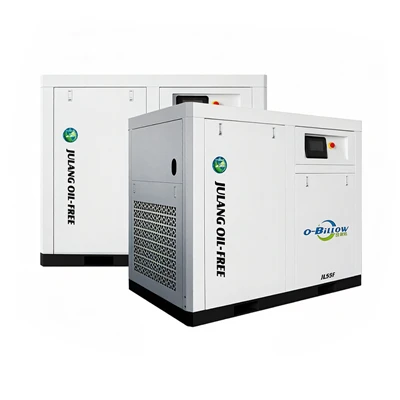
At our company, we offer a wide range of high - quality High Pressure Screw Air Compressors that are designed to meet the diverse needs of industrial applications. Our products also include Industrial Rotary Air Compressors, Vertical Rotary Screw Air Compressor, Vertical Screw Compressor, and Energy Efficient Screw Air Compressor.
If you are looking for a reliable and efficient air compressor solution, we invite you to contact us for procurement and further discussions. Our team of experts is ready to assist you in selecting the right compressor for your specific needs and providing you with comprehensive after - sales support.
References
- Compressed Air and Gas Handbook.
- ASME Performance Test Codes for Air Compressors.
- Technical manuals of high pressure screw air compressors.