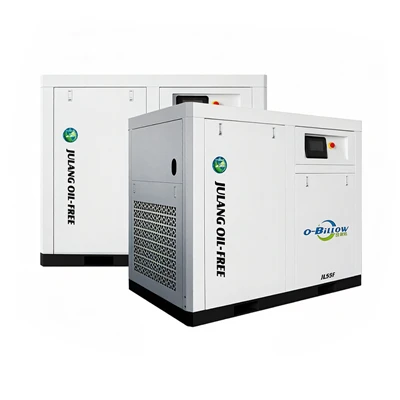

As a supplier of High Pressure Screw Compressors, I've witnessed firsthand the intricate relationship between gas composition and the performance of these vital industrial machines. High pressure screw compressors are widely used in various industries, from petrochemical to food and beverage, for their efficiency and reliability in compressing gases. However, the composition of the gas being compressed can have a profound impact on the compressor's operation, efficiency, and longevity.
Understanding Gas Composition
Gas composition refers to the types and proportions of different gases present in a mixture. In industrial applications, the gas being compressed can be a pure gas, such as nitrogen or oxygen, or a complex mixture of gases, like natural gas or refinery off - gases. Each gas has unique physical properties, such as molecular weight, specific heat, and compressibility factor, which influence how it behaves under compression.
Molecular Weight
The molecular weight of a gas affects the compressor's power consumption and capacity. Gases with higher molecular weights, like sulfur hexafluoride (SF₆), require more energy to compress than lighter gases, such as hydrogen. This is because higher - molecular - weight gases have more mass per unit volume, and more work is needed to increase their pressure. As a result, a compressor designed for a low - molecular - weight gas may struggle to handle a high - molecular - weight gas efficiently, leading to increased energy costs and potentially reduced throughput.
Specific Heat
Specific heat is the amount of heat required to raise the temperature of a unit mass of a gas by one degree Celsius. Gases with high specific heats, such as water vapor, absorb more heat during compression, which can lead to higher discharge temperatures. Elevated discharge temperatures can cause lubricant degradation, seal failure, and accelerated wear of compressor components. Additionally, high temperatures can reduce the efficiency of the compression process as more energy is lost as heat.
Compressibility Factor
The compressibility factor is a measure of how much a real gas deviates from ideal gas behavior. For ideal gases, the compressibility factor is 1 at all pressures and temperatures. However, real gases can have compressibility factors greater or less than 1, depending on their pressure, temperature, and composition. Gases with compressibility factors significantly different from 1 require special considerations in compressor design and operation. For example, gases with high compressibility factors may experience more significant volume changes during compression, which can affect the compressor's volumetric efficiency.
Impact on Compressor Performance
Efficiency
The gas composition can significantly affect the efficiency of a high pressure screw compressor. As mentioned earlier, gases with high molecular weights or high specific heats require more energy to compress, reducing the compressor's overall efficiency. Additionally, the presence of condensable gases, such as water vapor or hydrocarbons, can cause problems during compression. When these gases condense, they can form liquid slugs in the compressor, which can damage the rotors and other internal components. This not only reduces the efficiency of the compressor but also increases maintenance costs and downtime.
Capacity
The capacity of a high pressure screw compressor is also influenced by gas composition. Compressors are typically designed to handle a specific gas or gas mixture with known properties. If the gas composition deviates from the design specifications, the compressor's capacity may be reduced. For example, if a compressor is designed to compress air but is used to compress a gas mixture with a higher molecular weight, the compressor may not be able to achieve the same volumetric flow rate. This can lead to production bottlenecks and reduced productivity in industrial processes.
Maintenance and Reliability
Gas composition can have a major impact on the maintenance and reliability of a high pressure screw compressor. Corrosive gases, such as hydrogen sulfide or chlorine, can cause significant damage to the compressor's internal components, including the rotors, housing, and seals. This can lead to premature wear and failure, increasing the frequency and cost of maintenance. Additionally, the presence of solid particles or contaminants in the gas can cause abrasion and erosion of the compressor components, further reducing the compressor's reliability.
Case Studies in Different Industries
Petrochemical Industry
In the petrochemical industry, high pressure screw compressors are used to compress a variety of hydrocarbon gases, such as methane, ethane, and propane. These gases often contain impurities, such as sulfur compounds and heavy hydrocarbons. The presence of sulfur compounds can cause corrosion of the compressor components, while heavy hydrocarbons can lead to fouling and clogging. To address these issues, petrochemical plants typically use filtration and treatment systems to remove impurities from the gas before it enters the compressor.
Power Generation
In power generation, high pressure screw compressors are used for various applications, such as compressing air for combustion and gas turbine cooling. The composition of the intake air can have a significant impact on the compressor's performance. For example, in coastal areas, the air may contain salt particles, which can cause corrosion and erosion of the compressor components. Power plants often install air intake filters to remove these particles and protect the compressor.


Food and Beverage Industry
In the food and beverage industry, high pressure screw compressors are used to compress gases for packaging and processing. Oxygen and nitrogen are commonly used gases in this industry. However, the presence of moisture in the compressed gas can lead to spoilage of food products. To ensure the quality and safety of the food products, the compressor must be capable of delivering dry and clean gas. This often requires the use of desiccant dryers and filters to remove moisture and contaminants from the gas.
Our Solutions as a High Pressure Screw Compressor Supplier
As a leading supplier of High Pressure Screw Compressors, we understand the challenges posed by different gas compositions. Our compressors are designed with advanced features to handle a wide range of gas mixtures:
- Customized Designs: We offer customized compressor designs to meet the specific requirements of different industries and gas compositions. Our engineering team can analyze the gas composition and tailor the compressor design, including the rotor profile, lubrication system, and cooling mechanism, to ensure optimal performance.
- Advanced Filtration and Treatment Systems: We provide state - of - the - art filtration and treatment systems to remove impurities, moisture, and contaminants from the gas before it enters the compressor. This helps to protect the compressor components and extend the compressor's lifespan.
- Monitoring and Control Systems: Our compressors are equipped with advanced monitoring and control systems that can continuously monitor the gas composition, pressure, temperature, and other operating parameters. This allows operators to detect any changes in the gas composition early and take appropriate actions to optimize the compressor's performance.
In addition to our high - quality High Pressure Screw Compressors, we also offer a range of related products, such as Industrial Rotary Screw Compressor, Vertical Rotary Screw Air Compressor, Vertical Screw Compressor, and Industrial Screw Type Air Compressor. These products are designed to provide reliable and efficient compression solutions for various industrial applications.
Conclusion and Call to Action
Gas composition plays a crucial role in the performance, efficiency, and reliability of high pressure screw compressors. Understanding the impact of gas composition on compressor operation is essential for optimizing the performance of industrial processes. As a trusted supplier of high pressure screw compressors, we are committed to providing our customers with the best - in - class products and solutions to meet their specific gas compression needs.
If you are looking for a high - quality high pressure screw compressor or need more information about how gas composition affects compressor performance, we invite you to contact us. Our team of experts is ready to assist you in selecting the right compressor for your application and providing you with customized solutions. Let's work together to ensure the efficient and reliable operation of your industrial processes.
References
- "Compressors: Selection and Sizing" by Iver J. Brown
- "Gas Compression Handbook" by Heinz P. Bloch
- "Industrial Gas Compression" by Peter A. Schweitzer