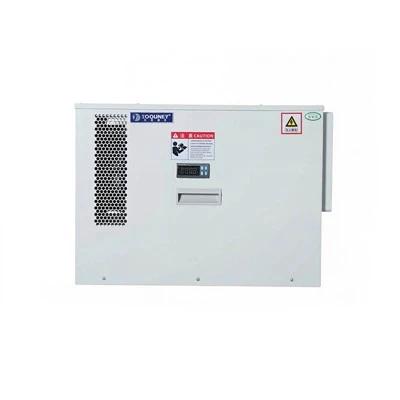

As a supplier of industrial chillers, I've witnessed firsthand the crucial role that pumps play within these systems. Industrial chillers are essential for a wide range of industries, from manufacturing to data centers, where precise temperature control is necessary to ensure optimal performance and equipment longevity. In this blog, I'll delve into the specific functions and significance of pumps in industrial chillers.
1. Circulation of Refrigerant
The primary function of a pump in an industrial chiller is to circulate the refrigerant throughout the system. Refrigerant is the life - blood of the chiller, responsible for absorbing heat from the process or equipment being cooled and then releasing it to the environment. The pump creates the necessary pressure to move the refrigerant through the various components of the chiller, such as the evaporator, compressor, condenser, and expansion valve.
In the evaporator, the refrigerant absorbs heat from the chilled water or air, changing from a liquid to a vapor. The pump then moves this vapor to the compressor, where it is compressed to a high - pressure, high - temperature state. From the compressor, the refrigerant flows to the condenser, where it releases the absorbed heat to the surrounding environment, returning to a liquid state. Finally, the pump moves the liquid refrigerant back to the evaporator to start the cycle again.
Without a properly functioning pump, the refrigerant would not be able to circulate effectively, and the chiller would not be able to cool the process or equipment. This can lead to overheating, reduced efficiency, and potential damage to the chiller and other connected systems.
2. Cooling Water Circulation
In addition to circulating the refrigerant, pumps are also used to circulate the cooling water in water - cooled industrial chillers. Cooling water is used to remove heat from the condenser, helping to maintain the efficiency of the chiller. The pump draws water from a cooling tower or other water source and circulates it through the condenser, where it absorbs heat from the refrigerant.
The heated water is then returned to the cooling tower, where it is cooled by evaporation before being recirculated through the system. This continuous circulation of cooling water is essential for the proper operation of the chiller, as it ensures that the condenser remains at an optimal temperature.
For example, in a large - scale manufacturing plant, the cooling water pump in an industrial chiller may need to circulate thousands of gallons of water per minute to maintain the desired cooling capacity. Any disruption in the water circulation can lead to a significant increase in the chiller's operating temperature, reducing its efficiency and potentially causing damage to the equipment.
3. Maintaining System Pressure
Pumps are also responsible for maintaining the proper pressure within the industrial chiller system. The pressure within the chiller affects the performance of the refrigerant and the overall efficiency of the system. By controlling the flow rate and pressure of the refrigerant and cooling water, the pump ensures that the chiller operates within its designed parameters.
In the refrigerant circuit, the pump maintains the pressure difference between the evaporator and the condenser, which is necessary for the refrigerant to change phase and transfer heat effectively. In the cooling water circuit, the pump maintains the pressure required to circulate the water through the condenser and other components.
If the pressure within the system is too low, the refrigerant may not be able to absorb or release heat efficiently, leading to reduced cooling capacity. On the other hand, if the pressure is too high, it can cause damage to the components of the chiller, such as the compressor and the condenser.
4. Types of Pumps Used in Industrial Chillers
There are several types of pumps commonly used in industrial chillers, each with its own advantages and applications.
Centrifugal Pumps
Centrifugal pumps are the most widely used type of pump in industrial chillers. They work by using a rotating impeller to create centrifugal force, which moves the fluid through the pump. Centrifugal pumps are known for their high flow rates and relatively low pressure capabilities, making them suitable for applications where large volumes of fluid need to be circulated, such as in the cooling water circuit of a chiller.
Positive Displacement Pumps
Positive displacement pumps, such as gear pumps and piston pumps, are used in applications where precise control of flow rate and pressure is required. These pumps work by trapping a fixed volume of fluid and then forcing it through the pump. Positive displacement pumps are often used in the refrigerant circuit of industrial chillers, where they can provide the high pressures needed to compress the refrigerant.
5. Importance of Pump Selection
Selecting the right pump for an industrial chiller is crucial for ensuring the optimal performance and efficiency of the system. When choosing a pump, several factors need to be considered, including the flow rate, pressure requirements, fluid properties, and the overall design of the chiller.
The flow rate of the pump should be sufficient to meet the cooling requirements of the chiller. If the flow rate is too low, the chiller may not be able to cool the process or equipment effectively. On the other hand, if the flow rate is too high, it can lead to increased energy consumption and unnecessary wear and tear on the pump.
The pressure requirements of the pump depend on the specific components of the chiller and the length of the piping system. The pump should be able to generate enough pressure to overcome the resistance in the system and ensure proper circulation of the refrigerant and cooling water.
The properties of the fluid being pumped, such as its viscosity, temperature, and chemical composition, also need to be considered. Some fluids may require special materials or coatings for the pump to prevent corrosion or damage.


6. Impact on Energy Efficiency
The pump plays a significant role in the energy efficiency of an industrial chiller. A well - designed and properly maintained pump can reduce energy consumption and operating costs. For example, using a variable - speed pump can allow the pump to adjust its speed based on the actual cooling requirements of the chiller, reducing energy waste.
In addition, proper pump sizing and selection can ensure that the pump operates at its optimal efficiency point. An oversized pump will consume more energy than necessary, while an undersized pump may not be able to provide the required flow rate and pressure, leading to reduced cooling performance.
7. Our Industrial Chiller Products
As an industrial chiller supplier, we offer a wide range of chiller products to meet the diverse needs of our customers. Our Machine Tool Chillers are specifically designed for use in machine tool applications, providing precise temperature control to ensure the accuracy and reliability of machining processes.
Our Industrial Air Cooled Water Chiller is a popular choice for applications where water availability is limited or where a compact and easy - to - install solution is required. These chillers use air as the cooling medium, eliminating the need for a separate cooling tower.
For applications that require high efficiency and large cooling capacities, our High Efficiency Water Cooled Chiller is an excellent option. These chillers use water as the cooling medium, providing superior heat transfer and energy efficiency.
8. Contact Us for Procurement
If you are in the market for an industrial chiller or have any questions about the role of pumps in these systems, we invite you to contact us. Our team of experts can provide you with detailed information about our products, help you select the right chiller for your application, and assist you with the procurement process.
References
- ASHRAE Handbook of Refrigeration. American Society of Heating, Refrigerating and Air - Conditioning Engineers.
- Industrial Refrigeration Handbook. CRC Press.
- Chiller Systems: Design, Operation, and Maintenance. McGraw - Hill Professional.